Free tool
Macro split calculator and meal plan
Everything from the calorie, protein, fat and carbohydrate steps on one page.
Evidence-checkedEdited by Chris Mann Dip.IOPNHow we check thisClose
Every figure and rating this tool shows comes from one set of tested rules, the same ones used across the Hub and our AI tools, with the method and sources named on the page.
Advertising never decides what we write or recommend. If something is wrong, we correct it and record the change.
Short answer: Set protein at 1.6 to 2.2 g per kg of bodyweight and fat at about 0.8 g per kg, then give the remaining calories to carbohydrate, and split the totals across your meals.
Your full nutrition plan
Your plan fills in as you complete each step. Still to do:
What is the best macro split for muscle gain?
Rather than a fixed ratio such as 40/30/30, this plan sets protein from bodyweight (1.6 to 2.2 g/kg), fat from bodyweight (about 0.8 g/kg) and carbohydrate from the calories left. Your split as percentages then follows from your own figures.
How to split your macros into 3, 4 or 5 meals
Choose your number of meals and the plan divides each daily total equally. Real meals do not need to match exactly, as long as the day adds up.
Bulking vs cutting: how the split changes
When calories go up for a bulk or down for a cut, protein and fat stay close to the same and carbohydrate takes most of the change. Start your calories with the TDEE calculator.
Frequently asked questions about macro splits
Is a 40/30/30 macro split good for bodybuilding?
How often should I recalculate my macros?
Embed this calculator on your website
Free for coaches, gyms and writers. Paste this code into your page; it stays up to date automatically.
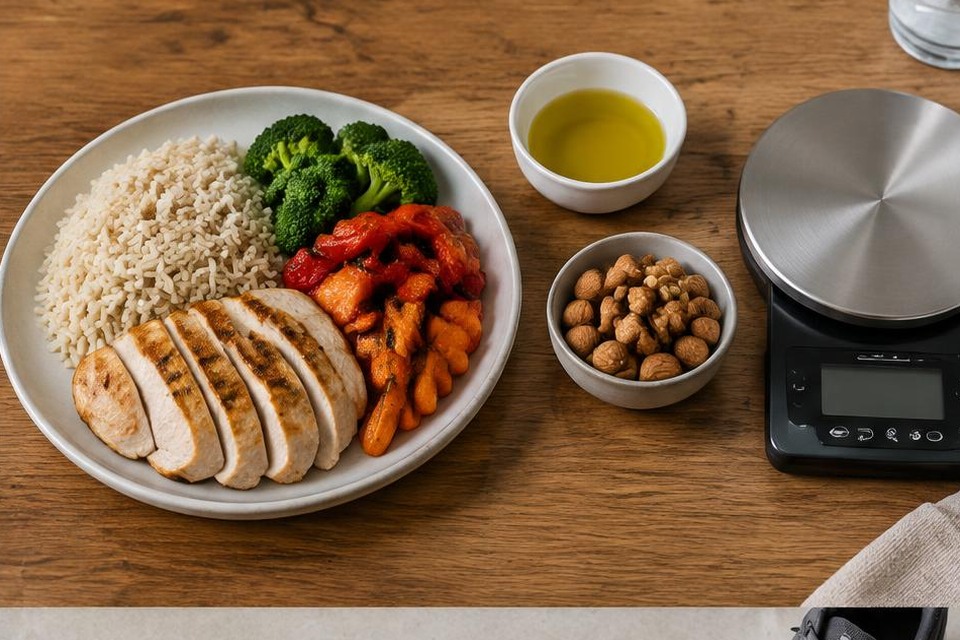
How the calculation works
The plan subtracts protein grams × 4 and fat grams × 9 from your daily calories, then divides the remaining energy by 4 to give whole grams of carbohydrate. A plan with no energy left for carbohydrate is rejected. Protein and fat percentages are rounded; carbohydrate takes the remainder to make 100. Meal figures divide each daily total by your number of meals.
Worked example
Entering 2800 kcal, 160 g protein and 70 g fat returns 383 g carbohydrate, with energy shares of 23% protein, 23% fat and 54% carbohydrate. Across 4 equal meals, that is 700 kcal, 40 g protein, 18 g fat and 96 g carbohydrate per meal.
What the result cannot tell you
The plan organises the targets you enter; it does not decide whether those targets suit your energy needs or make a varied diet. Rounding means meal grams may not add back to the daily figures exactly. Equal portions are optional. This is educational information, not medical advice.
Common questions
Why do the percentages always total 100?
Protein and fat are rounded first, then carbohydrate is given whatever is left rather than rounded separately.
Why might no plan appear?
Either the calories are outside the supported range, or your protein and fat leave no energy for carbohydrate.
Must every meal match the split?
No. The per-meal figures are equal shares to help planning, not a rule to eat identical meals.

Chris Mann Dip.IOPN is a sports nutritionist, qualified personal trainer and founder of The Muscle & Strength Hub, with six years of experience helping people build muscle, develop strength and improve their nutrition.
- Dip.IOPN
- PN Level 1
- Level 4 Nutrition
- Level 3 PT
Certificates and full profileEditorial independenceCorrections
Share this calculator
Was this tool helpful?
Educational information for adults aged 18 and over. It does not diagnose, treat or manage any medical condition. If you have a health condition, or symptoms that worry you, speak to your doctor or a health professional.