Skip to content
Skip to content

Free tool

DOTS and Wilks calculator

Compare strength across bodyweights with DOTS and Wilks scores.

Evidence-checkedEdited by How we check this

Every figure and rating this tool shows comes from one set of tested rules, the same ones used across the Hub and our AI tools, with the method and sources named on the page.

Advertising never decides what we write or recommend. If something is wrong, we correct it and record the change.

Editorial standardsEvidence policyCorrections

Short answer: DOTS and Wilks adjust a squat, bench and deadlift total for bodyweight so lifters of different sizes can be compared on one scale.

Sex assigned at birth
DOTS
275.82
Wilks
273.08

DOTS (IPF, 2019) and the original Wilks formula adjust a powerlifting total for bodyweight so lifters of different sizes can be compared. Your body figures stay on this device so the Hub's other calculators can fill them in for you, and are never sent anywhere.

How DOTS and Wilks scores are calculated

Both formulas take your powerlifting total in kg (best squat + bench press + deadlift), multiply it by 500 and divide by a curve based on your bodyweight. Men and women use different coefficients.

The result is a single number that lets a lighter and a heavier lifter be compared on the same scale.

DOTS vs Wilks: why there are two formulas

Wilks is the older formula and was the standard for decades. DOTS was introduced later as a newer fit to bodyweight. The two use different coefficient sets, so the same total gives different numbers and the scores cannot be swapped for each other.

Federations choose their own scoring. The IPF now uses its own IPF GL points, which have a separate calculator.

What is a good DOTS score?

There is no official grading of DOTS or Wilks scores, so this calculator does not label yours. The most useful comparisons are with your own past scores, or with lifters in the same federation, division and equipment category.

Competing in the IPF? Score your total with IPF GL points, or see each lift as a multiple of your bodyweight.

Before a heavy session, plan your warm-up sets and plates. All powerlifting and strength tools

Embed this calculator on your website

Free for coaches, gyms and writers. Paste this code into your page; it stays up to date automatically.

See all embeddable calculators and instructions

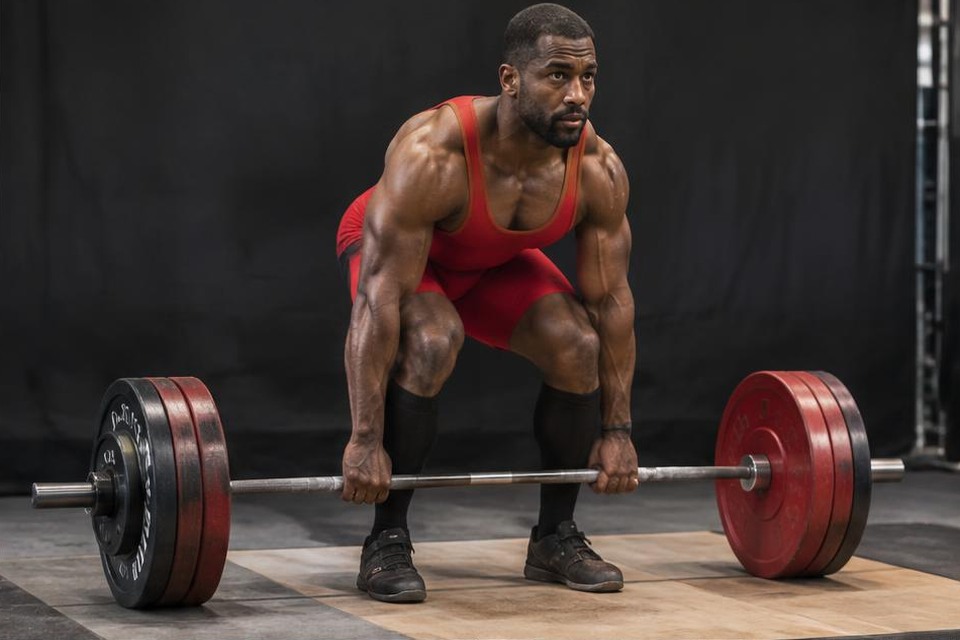
A male powerlifter setting up a deadlift on a platform.

How the calculation works

Each score is your total in kg × 500, divided by a bodyweight polynomial with the selected male or female coefficients. DOTS and original Wilks use different coefficient sets, so their scores are not interchangeable. The total is the sum of squat, bench press and deadlift.

Worked example

For the male option, bodyweight 80 kg and a 400 kg total, the implemented formulas return 275.82 DOTS and 273.08 original Wilks points. The same total can produce different scores at a different bodyweight.

What the result cannot tell you

Neither score grades technique or establishes a strength standard. The DOTS bodyweight input is capped at the formula's implemented range: 40–210 kg for the male coefficients and 40–150 kg for the female coefficients. Wilks uses the entered bodyweight. IPF GL is a separate scoring system; check your federation's rules for the score it uses.

Common questions

Is DOTS the same as IPF GL?

No. They are different formulas. Use the separate IPF GL points calculator when that is the scoring system you need.

Can I compare DOTS directly with Wilks?

No. Compare like with like: the same formula and comparable competition conditions.

Does the calculator account for equipment divisions?

This page has no equipment-division input. A score alone does not make classic and equipped results directly comparable.

How are DOTS points calculated from bodyweight and total?

Your total in kg is multiplied by 500 and divided by a bodyweight curve with separate coefficients for men and women.

Why do some federations use DOTS instead of Wilks?

DOTS is a newer fit to bodyweight than the original Wilks formula. Each federation chooses its own scoring, so check its rules.

Share this calculator

Free download

Print it or save it to your phone. No email or sign-up. All templates

Free printable · 2 pages · A4

First powerlifting meet planner

What each lift must show, a meet-day checklist and an attempt planner for your first competition.

  • The squat, bench and deadlift standards and commands (IPF rulebook)
  • Meet-day checklist: weigh-in, kit, food and a handler
  • An attempt planner with space to adjust after each lift

Share this template

Was this tool helpful?

Educational information for adults aged 18 and over. It does not diagnose, treat or manage any medical condition. If you have a health condition, or symptoms that worry you, speak to your doctor or a health professional.