Biomechanics & Exercise Science6 min readIntermediate
Lengthened partials: do stretched half reps build more muscle?
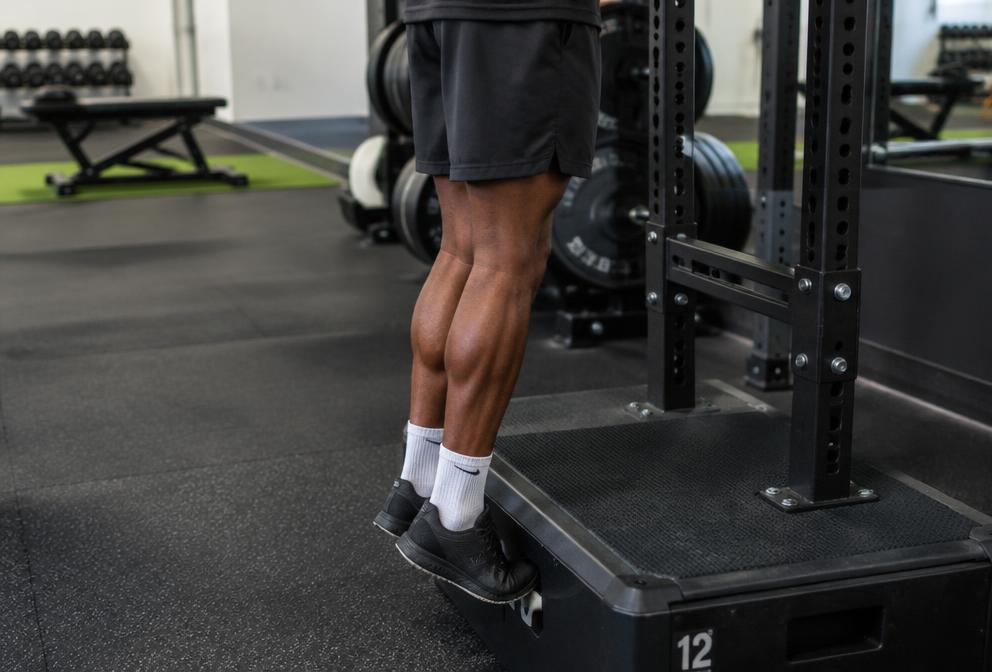
A lengthened partial is a rep that stays in the stretched half of an exercise: the bottom of a squat, the bottom of a curl or the stretch of a calf raise. You never lock out at the top.
Share this guide
The short answer
Lengthened partials appear to build muscle about as well as full reps, and sometimes better. Reviews found partials in the stretched part of the range matched or slightly beat full range, while partials in the shortened part did worse (Wolf et al., 2023; Pallarés et al., 2021). Full reps remain a sound default; lengthened partials are a useful option.
- Full reps build strength through the whole range, so most programmes keep them.
What are lengthened partials?
They are different from cheat reps or top-half partials, which skip the hardest stretched part of the lift. The idea comes from research on stretch-mediated hypertrophy.
Do lengthened partials build more muscle than full reps?
In leg extensions, partials at long muscle lengths built quadriceps size similar to or better than full range (Pedrosa et al., 2022). Earlier reviews concluded that full range is generally better than short partials (Pallarés et al., 2021).
How to use lengthened partials
- Keep full reps as the base of your training.
- Add lengthened partials after your last full rep to extend a set.
- Use them on exercises that are safe to stretch, such as calf raises, curls and leg curls.
- Control the stretch; do not bounce.
Find exercises that already load the stretched position by muscle.
Who should be careful with lengthened partials
Deep stretch under load can feel uncomfortable at first. Build up gradually. If a joint hurts in the stretched position, shorten the range or choose another exercise.
People also ask
How many lengthened partials should I do?
A few extra partial reps after your last full rep, or whole sets of partials on one exercise, are common ways to start.
Are lengthened partials better than full reps?
They seem at least as good for muscle growth. Full reps remain better for strength through the whole range.
Do partial reps build muscle?
Partials in the stretched part of the lift do. Partials near the top, where the muscle is short, build less.
Which exercises suit lengthened partials?
Calf raises, curls, leg curls, leg extensions and machine presses suit them best.
Was this guide helpful?
Scientific References & Evidence
- Kassiano W. et al. (2023). Greater gastrocnemius muscle hypertrophy after partial range of motion training performed at long muscle lengths. Journal of Strength and Conditioning Research, 37(9), 1746–1753. Available at: https://doi.org/10.1519/JSC.0000000000004460 (Accessed: 23 August 2026).
- Pallarés J. G. et al. (2021). Effects of range of motion on resistance training adaptations: a systematic review and meta-analysis. Scandinavian Journal of Medicine & Science in Sports, 31(10), 1866–1881. Available at: https://doi.org/10.1111/sms.14006 (Accessed: 23 August 2026).
- Pedrosa G. F. et al. (2022). Partial range of motion training elicits favorable improvements in muscular adaptations when carried out at long muscle lengths. European Journal of Sport Science, 22(8), 1250–1260. Available at: https://doi.org/10.1080/17461391.2021.1927199 (Accessed: 23 August 2026).
- Wolf M. et al. (2023). Partial vs full range of motion resistance training: a systematic review and meta-analysis. International Journal of Strength and Conditioning, 3(1). Available at: https://doi.org/10.47206/ijsc.v3i1.182 (Accessed: 23 August 2026).
Read next
Seated vs lying leg curl: which is better for your hamstrings?
Why the seated leg curl built more hamstring muscle in a direct comparison, and when the lying curl still helps.
Quick answerBiomechanics & Exercise Science5 min readIntermediate
Overhead tricep extension vs pushdown: which builds bigger triceps?
Why overhead triceps work built more muscle than pushdowns, and how to train the long head.
Quick answerBiomechanics & Exercise Science5 min readIntermediate
Educational information for adults aged 18 and over. It does not diagnose, treat or manage any medical condition. If you have a health condition, or symptoms that worry you, speak to your doctor or a health professional.